If you have lived in the Las Vegas valley for any length of time, you have probably heard a neighbor mention caliche, usually with some feeling. It is the single most distinctive thing about building anything below grade in the Mojave, and it is the reason two identical pool designs on two nearby lots can have very different construction experiences.
Here is what it actually is, and what it means for a pool project.
What caliche is
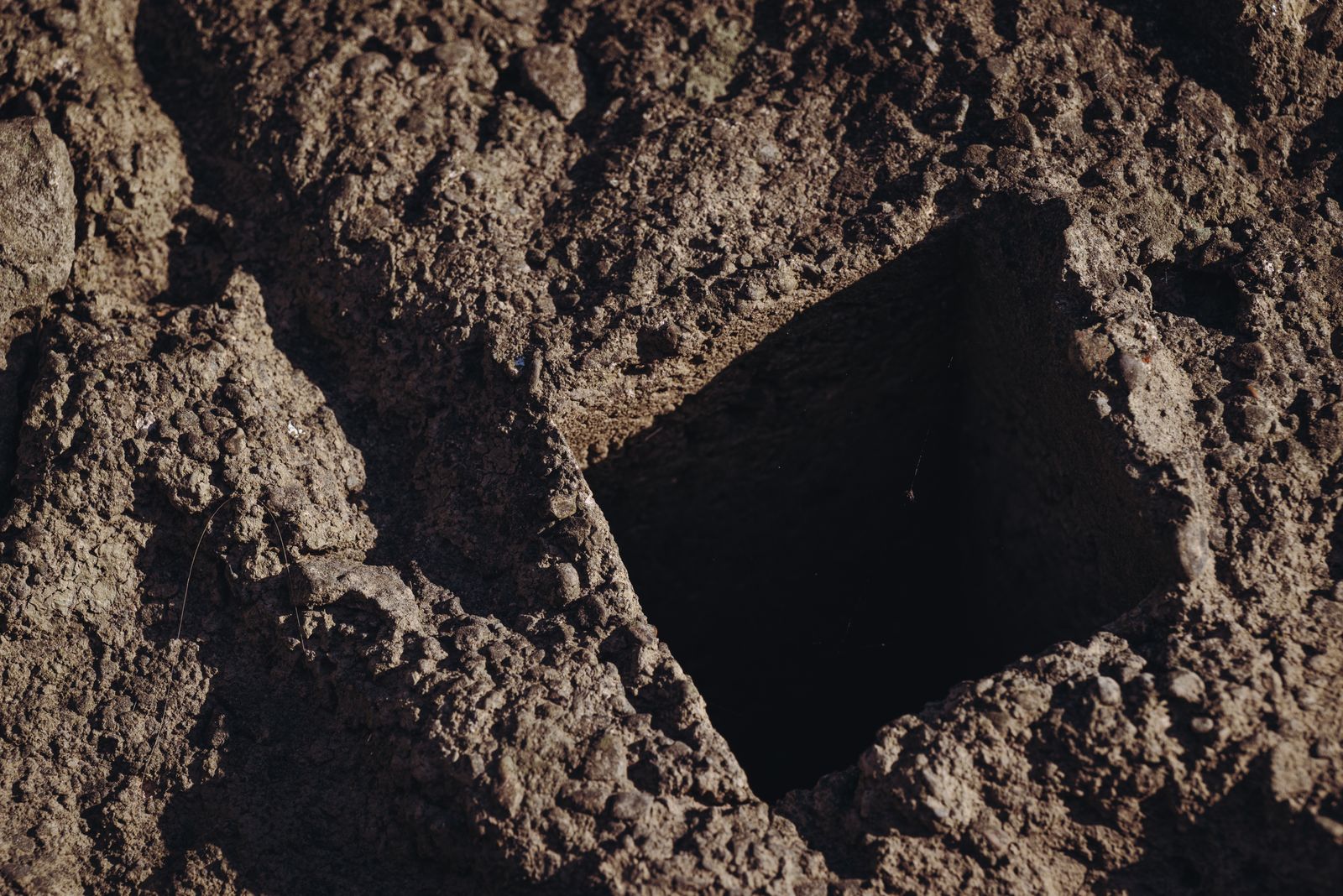
Caliche is a naturally cemented soil layer. In arid climates, water moving through the soil dissolves calcium carbonate, carries it down a short distance, and then evaporates before it can drain away. The calcium carbonate is left behind, and over thousands of years it binds the surrounding sand and gravel into a hardened mass.
The result behaves less like soil and more like concrete. Engineers in this region classify it among heavily cemented soils, and it ranges from a crumbly, chalky material you can break with a shovel to layers dense enough that they must be broken with a hydraulic hammer.
It is found throughout Southern Nevada, and it is one of the reasons desert construction methods differ from those used almost anywhere else in the country.
Why it matters for a pool
A pool requires removing a substantial volume of earth to a specific shape and depth. When part of that volume is cemented rock, three things change.
The excavation method changes
Standard excavation equipment moves soil. Caliche often has to be broken before it can be moved, which means bringing in a hydraulic hammer or a rock saw. This is routine work for crews who build here regularly, and it is unfamiliar territory for crews who do not.
The schedule changes
Breaking rock takes longer than digging dirt. How much longer depends on the size of the pool and the soil conditions the crew actually encounters, which is why an experienced local builder treats the dig as a variable rather than a fixed block on the calendar. Because excavation sits at the front of the build, a longer dig shifts everything behind it, including the pre-gunite inspection.
The spoil changes
Broken caliche does not behave like excavated soil. It cannot simply be spread across the yard as fill, and it often has to be hauled off. This affects site logistics, particularly on lots with narrow side yard access, which is common in newer valley neighborhoods.
Caliche is unpredictable, even on one lot
This is the part that surprises homeowners most. Caliche does not form in a tidy, uniform sheet. Its depth and hardness can change across a single backyard. One corner of a dig can move easily while another ten feet away hits a dense layer.
It also means a neighbor’s experience is not a reliable predictor of yours. Two houses built by the same builder in the same year can sit on meaningfully different subsurface conditions.
A good builder plans for this rather than being surprised by it, and communicates clearly when conditions differ from what was anticipated. An honest conversation at the point of discovery is far better than a silent schedule slip.
The upside nobody mentions
Caliche has a genuine benefit, and it is significant. It provides excellent bearing capacity. A pool shell sitting on well-consolidated caliche has a very stable foundation, with far less risk of the settling and shifting that plagues pools built on soft, expansive or poorly compacted soils in other regions.
Put simply, the layer that makes the dig harder is part of why properly built Las Vegas pools hold their structure so well over decades. It is a short-term difficulty in exchange for a long-term structural advantage.
Caliche affects your landscape too, not just the pool
This is the part most pool-focused articles miss entirely. Caliche is close to impermeable. Water does not pass through it readily, which has real consequences above ground.
- Drainage. Rain and irrigation water that soaks into the top layer of soil can reach a caliche shelf and stop, pooling underground instead of draining away. In a monsoon downpour this is how yards flood even though the surface looks well graded.
- Planting. Trees and large shrubs need to get roots below the caliche layer. Planting holes often have to be broken through rather than dug, and a planting pit that traps water against a caliche floor will drown a tree that would otherwise thrive.
- Grading. Because subsurface water movement is restricted, surface grading and drainage design carry more of the load here than in regions with permeable soils.
This is why pool and landscape design belong in the same conversation. Decisions about where water goes have to account for what is underneath the whole yard, not just the pool shell.
What to ask before you build
- Has the builder worked extensively in this specific area of the valley, and what have they encountered nearby?
- Does the crew have rock-breaking equipment available, or does it have to be subcontracted and scheduled?
- How will the project communicate a change in subsurface conditions if one is found mid-dig?
- How does the drainage plan account for a caliche shelf, both around the pool and across the rest of the yard?
- Where will excavated material be staged, and how will it leave the site given the access available?
Frequently asked questions
Can you tell whether there is caliche before digging?
Regional geology and local experience give a strong indication, and soil investigation can confirm conditions at specific points. Because caliche varies across short distances, no pre-dig assessment eliminates uncertainty entirely. Experience in the immediate area is the most reliable guide.
Does caliche mean my pool will crack?
The opposite. Properly engineered and built on caliche, a pool shell benefits from stable bearing. Cracking is more commonly associated with poor compaction, inadequate reinforcement or unstable soils, not with hard bearing material.
Is caliche worse in some parts of the valley?
Depth and hardness vary across Southern Nevada, and crews who work a particular area develop a practical sense of what to expect. It is present broadly enough that any valley pool project should assume it may be encountered.
Does it affect an above-ground pool or a spa?
Anything requiring excavation or footings can encounter it. A shallower project encounters less of it, but equipment pads, plumbing trenches and electrical runs all go below grade.
Building on Mojave ground
Edgewater Custom Pools and Landscaping has built in the Las Vegas valley and in Mesquite for more than 50 years, and we run our own crews rather than subcontracting the core work. That matters most on the days when a dig does not go the way the plan assumed. If you would like to talk through what your lot is likely to involve, we are glad to walk the site with you.