Water policy in Southern Nevada changes more often than in almost any other part of the country, and pools sit right in the middle of it. If you are planning a new pool or reworking your landscape, a few specific rules determine what is actually possible. Here is the current picture, along with one widely repeated claim that is simply not true.
New residential pools are capped at 600 square feet
In July 2022 the Southern Nevada Water Authority approved a resolution supporting a 600-square-foot surface area limit on new residential pools. Local jurisdictions then implemented it through their own rule and code changes.
The limit applies to surface area, not volume, and it applies to new pools. Existing pools are unaffected, and so are pools already permitted.
It is worth putting the number in perspective. The measure was aimed at the largest 25% of new pools. The average existing residential pool in the region is roughly 470 to 475 square feet, comfortably inside the cap. For most homeowners the limit never becomes a constraint. It matters if you were envisioning a very large resort-style pool on a large lot.
What 600 square feet gives you
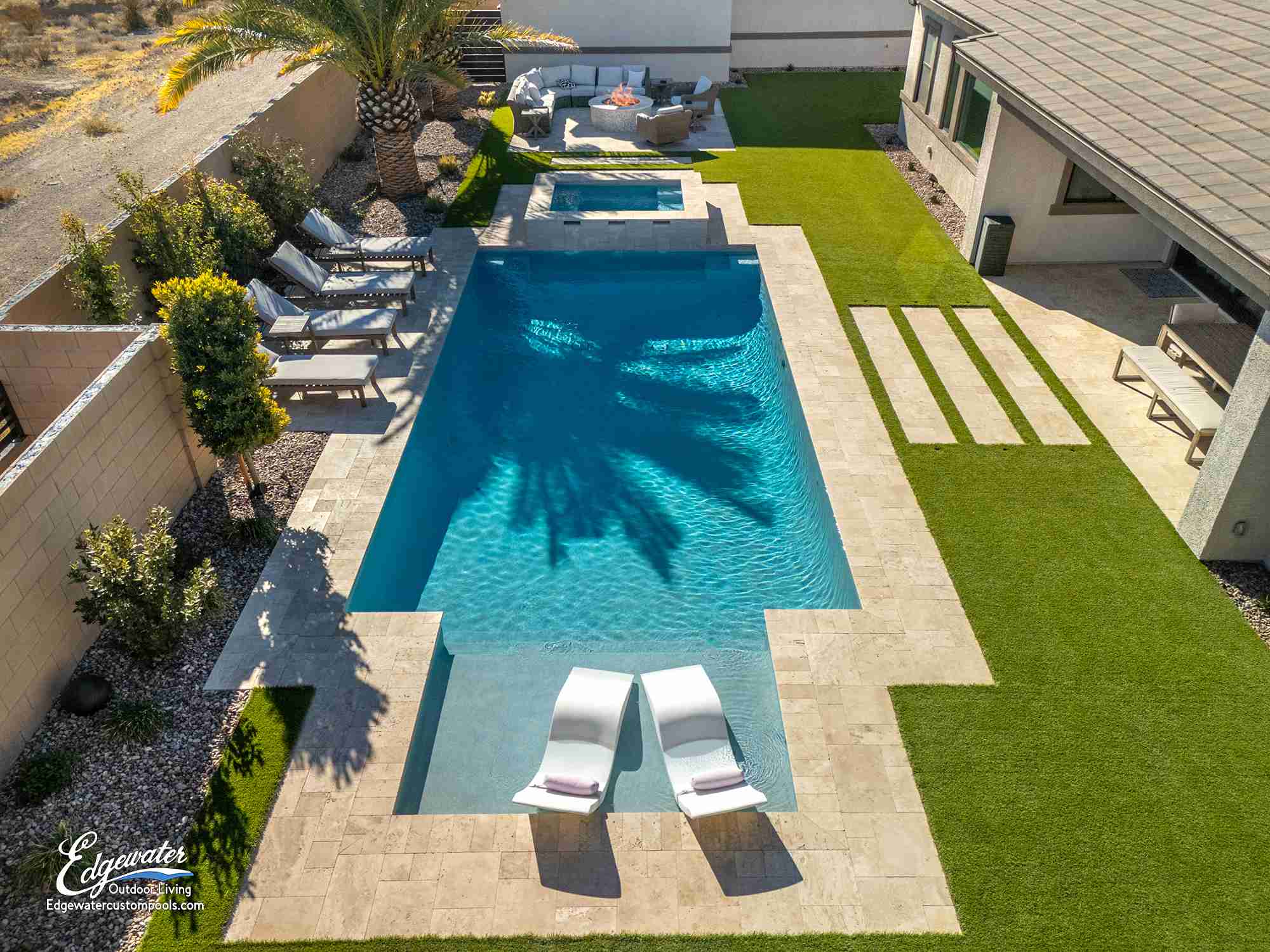
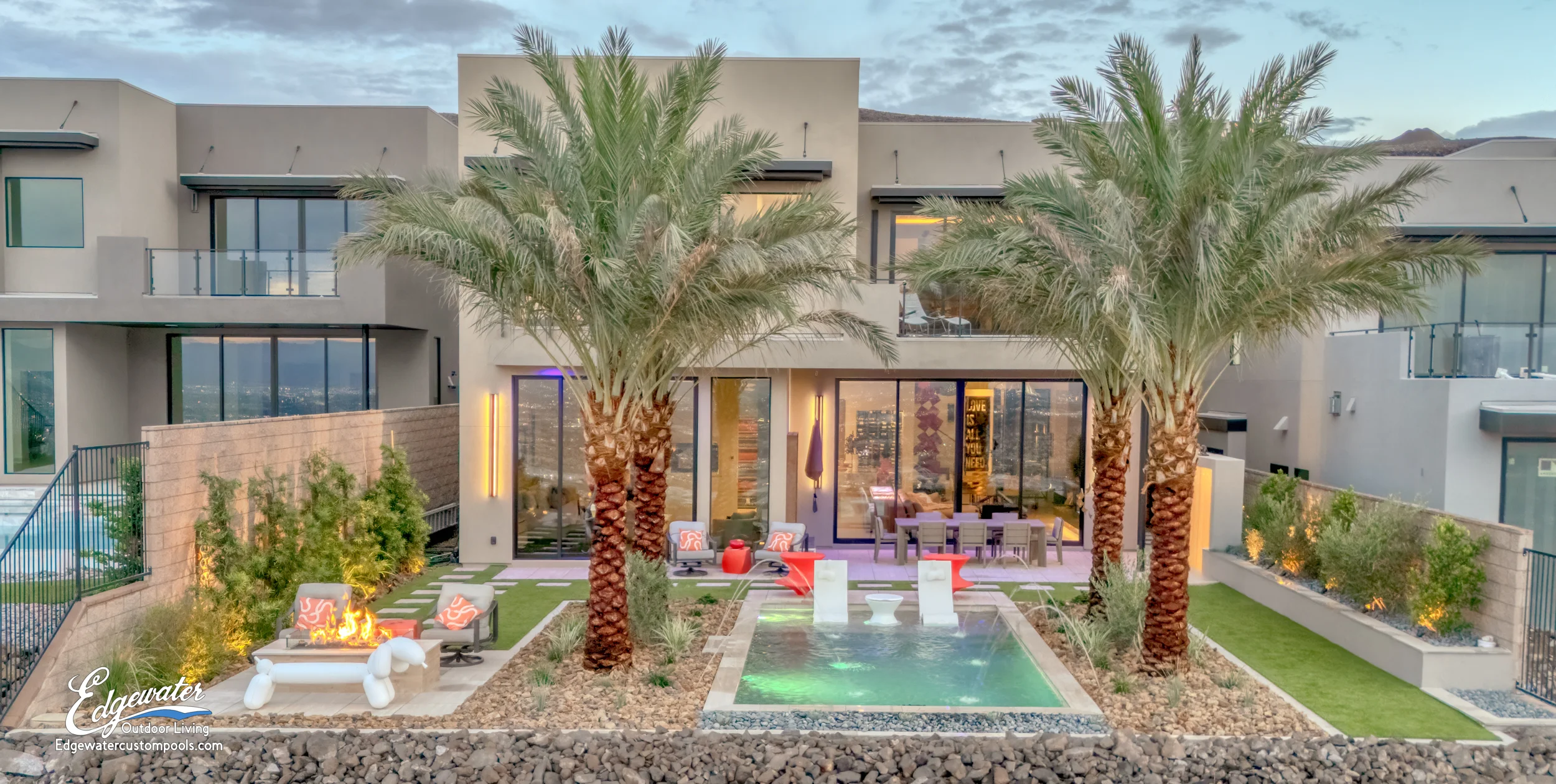
It is more usable water than people assume. It accommodates a generous freeform pool, a pool with an attached spa, a lap lane, or a pool with a tanning ledge and bench seating. What it rewards is thoughtful design: depth, shape and how the water is positioned in the yard matter more than raw square footage. A well-proportioned 550-square-foot pool with a raised bond beam, spillway and proper seating reads as far more impressive than a plain rectangle of the same size.
The Nevada turf law does not apply to your front or back yard
This is the misconception worth correcting. Assembly Bill 356 prohibits the use of Colorado River water to irrigate nonfunctional turf, with a deadline of January 1, 2027. It applies to commercial, multi-family and government properties.
It does not include single-family residential homes with grass in the front or back yard. Homeowners are encouraged to convert unused grass voluntarily, and rebates support that, but there is no legal mandate to remove a single-family lawn.
Two related points do affect homeowners:
- HOA common areas are covered. If you live in a community with grass medians, entry monuments or common greenbelts, your association is subject to the deadline, and that work is being budgeted and scheduled right now across the valley.
- New developments are different. Grass is prohibited in the front and back yards of new residential developments, including new HOAs and custom homes. If you are building new, turf is not on the table regardless of the turf law’s scope for existing homes.
How pool water has to be drained
This one catches people out, and getting it wrong can create a real problem.
Pool water must be drained directly to the sanitary sewer system. It may not be discharged to the street, to a storm drain, or to a septic system. Storm drains in the valley run to Lake Mead, and pool water carries chemistry that does not belong there.
The recommended maximum discharge rate is 12 gallons per minute, which keeps the sewer system from being overwhelmed. You do not need to notify the water authority when replacing pool water, though a full drain and refill will show up on your water bill.
Most homes have a suitable sewer cleanout for this. Knowing where yours is before you need it is worth five minutes.
Evaporation is the real water story
Pool size limits get the headlines, but evaporation is where a pool actually loses water in the Mojave.
- An in-ground pool in Southern Nevada loses about 48.6 gallons per square foot per year to evaporation.
- For an average uncovered pool that works out to roughly 22,842 gallons a year, simply lifting off the surface into dry desert air.
- A pool cover reduces evaporation by about 90 percent, and also limits windblown debris and conserves energy.
That last figure is the single most effective thing a Southern Nevada pool owner can do about water use, and it is entirely within your control. It also happens to satisfy one of the code options for secondary barrier protection when a wall of the house forms part of your pool enclosure, so a safety cover can do two jobs at once.
Design choices that reduce evaporation
- Sheltering the pool from prevailing wind with walls, structures or planting, since moving air accelerates evaporation sharply
- Keeping water features off when the pool is not in use, because spillways and fountains dramatically increase the evaporating surface
- Choosing a cover at design stage rather than retrofitting one, so the housing or track integrates cleanly into the decking
Frequently asked questions
Is there a limit on pool depth in Southern Nevada?
The 600-square-foot rule governs surface area rather than depth. Depth is driven by use, safety code and structural design, including diving requirements if a board is planned.
Can I still get a rebate if I remove a pool?
The Water Smart Landscapes Rebate is available for pool removal and replacement with water-efficient landscaping, provided the pool is in good working order.
Do I have to cover my pool?
No. There is no mandatory pool cover requirement in Southern Nevada. It is strongly recommended, and it is one of the approved secondary barrier options where a dwelling wall forms part of the pool enclosure.
Does the 600-square-foot limit apply if I remodel my existing pool?
Remodels of existing pools are treated differently from new construction. If your project expands the water surface, discuss it with your builder early, since the scope determines how the jurisdiction classifies the work.
Designing within the rules
None of this makes a beautiful backyard harder to achieve. It makes design discipline more valuable. Edgewater Custom Pools and Landscaping designs and builds across Las Vegas, Henderson and Mesquite, and we work inside these requirements every day, including HOA architectural review and the drainage and barrier details that determine whether a plan passes on the first pass.