Las Vegas presents unique challenges for pool owners. Intense sun, high temperatures, and low humidity create conditions unlike anywhere else. Your pool needs special attention to stay clean, clear, and safe throughout the year.
Desert climate affects water chemistry, equipment performance, and surface materials differently than moderate climates. What works in other regions often fails here. Understanding these differences helps you maintain your pool efficiently and avoid costly problems down the road.
This guide reveals essential maintenance strategies specifically for Las Vegas pools. You’ll learn how to manage evaporation, balance chemicals in extreme heat, protect equipment, and keep your pool looking pristine year-round. Let’s explore what it takes to maintain a beautiful pool in the desert.
Managing Extreme Evaporation
Las Vegas pools lose significant water to evaporation daily. Summer heat combined with low humidity can evaporate 1 to 2 inches of water per week. That’s not just water loss, it concentrates chemicals and minerals, throwing your water balance off quickly.
Monitor water levels closely during peak summer months. Add water before the level drops below the skimmer opening. Low water levels damage pumps and reduce circulation effectiveness. Set a schedule to check levels at least twice weekly during hot weather.
Evaporation affects chemical balance more than most owners realize. As water evaporates, dissolved minerals and chemicals stay behind, becoming more concentrated. You’ll need to dilute your pool periodically by draining some water and refilling. Our team specializes in custom pool design that includes features to minimize evaporation and maintenance needs.
Chemical Balance in Desert Conditions
Desert heat accelerates chemical consumption dramatically. Chlorine breaks down faster in intense sunlight and high temperatures. Calcium hardness increases as water evaporates. pH levels fluctuate more than in moderate climates.
Test your water chemistry at least twice weekly during summer:
- Free chlorine should stay between 2 and 4 ppm for proper sanitation
- pH needs to remain between 7.4 and 7.6 for comfort and equipment protection
- Total alkalinity should measure 80-120 ppm to stabilize pH
- Calcium hardness requires 200-400 ppm to prevent surface damage
- Cyanuric acid (stabilizer) protects chlorine from UV breakdown
- Salt levels matter for saltwater pools, typically 2700-3400 ppm
Chemical adjustments happen more frequently here than elsewhere. Small, regular corrections work better than large, infrequent ones. Consider switching to liquid chlorine during peak summer when tablet chlorine can’t keep up with demand. Advanced pool automation systems monitor and adjust chemistry automatically, taking the guesswork out of water balance.
Equipment Care and Protection
Pool equipment works harder in Las Vegas than anywhere else. Pumps run longer cycles to combat algae growth. Filters trap more debris from wind and dust. Heaters face extreme temperature swings between seasons.
Pump maintenance prevents costly failures. Check baskets weekly and clean them when half full. Listen for unusual noises that signal bearing problems. Ensure proper water flow, restricted flow damages pumps quickly. Variable-speed pumps save energy and run cooler than single-speed models.
Filter cleaning schedules depend on type and usage. Cartridge filters need cleaning every 4-6 weeks during heavy use. DE filters require backwashing when pressure rises 8-10 psi above the clean reading. Sand filters need backwashing every 2-4 weeks typically. Replace filter media according to manufacturer recommendations to maintain efficiency.
Surface and Tile Maintenance
Desert conditions are particularly hard on pool surfaces. Intense UV exposure fades plaster faster. Mineral-rich water causes scaling on tile and surfaces. Wind brings dust and debris that constantly.
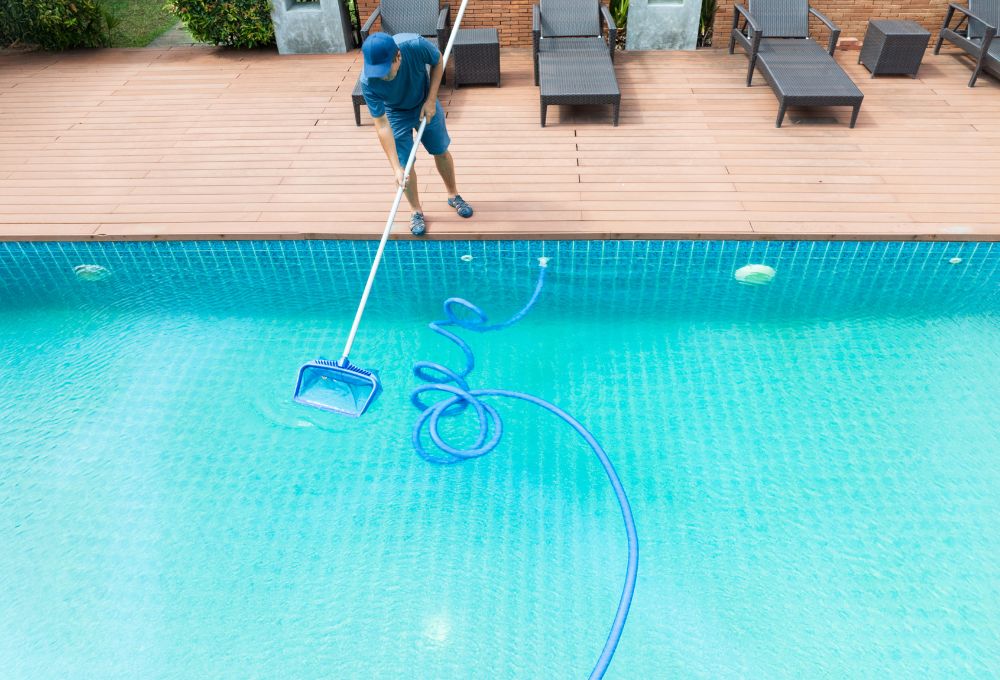
Brush your pool walls and floor weekly to prevent algae buildup and staining. Pay extra attention to areas with poor circulation, such as steps, corners, and behind ladders. Use appropriate brushes for your surface type. Plaster requires softer bristles, while pebble finishes handle stiffer brushes.
Tile cleaning prevents permanent staining and buildup. Calcium deposits form at the waterline as water evaporates. Weekly scrubbing with an appropriate tile cleaner keeps deposits manageable. Stubborn buildup requires professional cleaning with specialized tools and chemicals. Professional outdoor living design incorporates easy-maintenance materials that stand up to desert conditions.
Seasonal Adjustments and Considerations
Las Vegas has two distinct pool seasons that require different maintenance approaches. Summer demands vigilance and frequent attention. Winter allows reduced schedules but still needs consistent care to prevent problems.
Summer maintenance intensifies across all areas. Run your pump 8-12 hours daily to maintain circulation and filtration. Check chemical levels every 2-3 days as heat accelerates consumption. Empty skimmer and pump baskets twice weekly. Brush and vacuum more frequently as usage increases and algae risk rises.
Winter brings easier maintenance but requires consistency. Reduce pump run time to 4-6 hours daily. Check chemistry weekly instead of multiple times per week. Continue adding chlorine even though consumption drops dramatically. Algae still grows in winter, just slower. Never completely shut down your pool in Las Vegas; our mild winters don’t require winterization. Our extensive portfolio showcases pools designed for year-round Las Vegas enjoyment with minimal maintenance requirements.
Common Problems and Quick Solutions
Las Vegas pools face recurring issues that proper maintenance prevents. Recognizing problems early saves money and prevents damage. Most common issues have straightforward solutions when caught quickly.
Cloudy water usually indicates a filtration or chemical imbalance. Check your filter pressure and clean if high. Test and adjust chemicals to proper ranges. Run your pump longer to increase circulation. Shock the pool if chlorine is low or if you detect chloramines.
Green water means algae has taken hold. Brush thoroughly to break up colonies. Shock heavily triple or quadruple the normal dose. Run your filter continuously until the water clears. Vacuum to waste if possible to remove dead algae instead of filtering it. Test and rebalance chemicals once algae clears.
Scaling and staining result from mineral imbalance. Lower pH and alkalinity if scaling appears. Increase calcium hardness if surfaces feel rough or pitted. Use metal sequestrants if you notice metallic stains. Address water balance issues promptly to prevent permanent surface damage.
Maintaining Your Investment Long-Term
Consistent pool maintenance protects your investment and ensures years of enjoyment. Skipping maintenance leads to expensive repairs and premature equipment replacement. Small efforts regularly prevent major problems down the road.
Create a maintenance schedule that fits your lifestyle. Daily tasks take minutes: check water level, empty skimmer basket, and remove visible debris. Weekly tasks require 30-60 minutes: test chemistry, brush surfaces, and vacuum. Monthly tasks include deep equipment checks and detailed inspections.
Edgewater Custom Pools has maintained Las Vegas pools for over 50 years. We understand desert challenges and what actually works in extreme conditions. Our team provides expert guidance on maintenance strategies, equipment upgrades, and troubleshooting problems before they become serious.Ready to simplify your pool maintenance? Contact us today to learn about our maintenance services and automated systems that make pool care effortless. Let’s keep your pool pristine and ready to enjoy year-round.