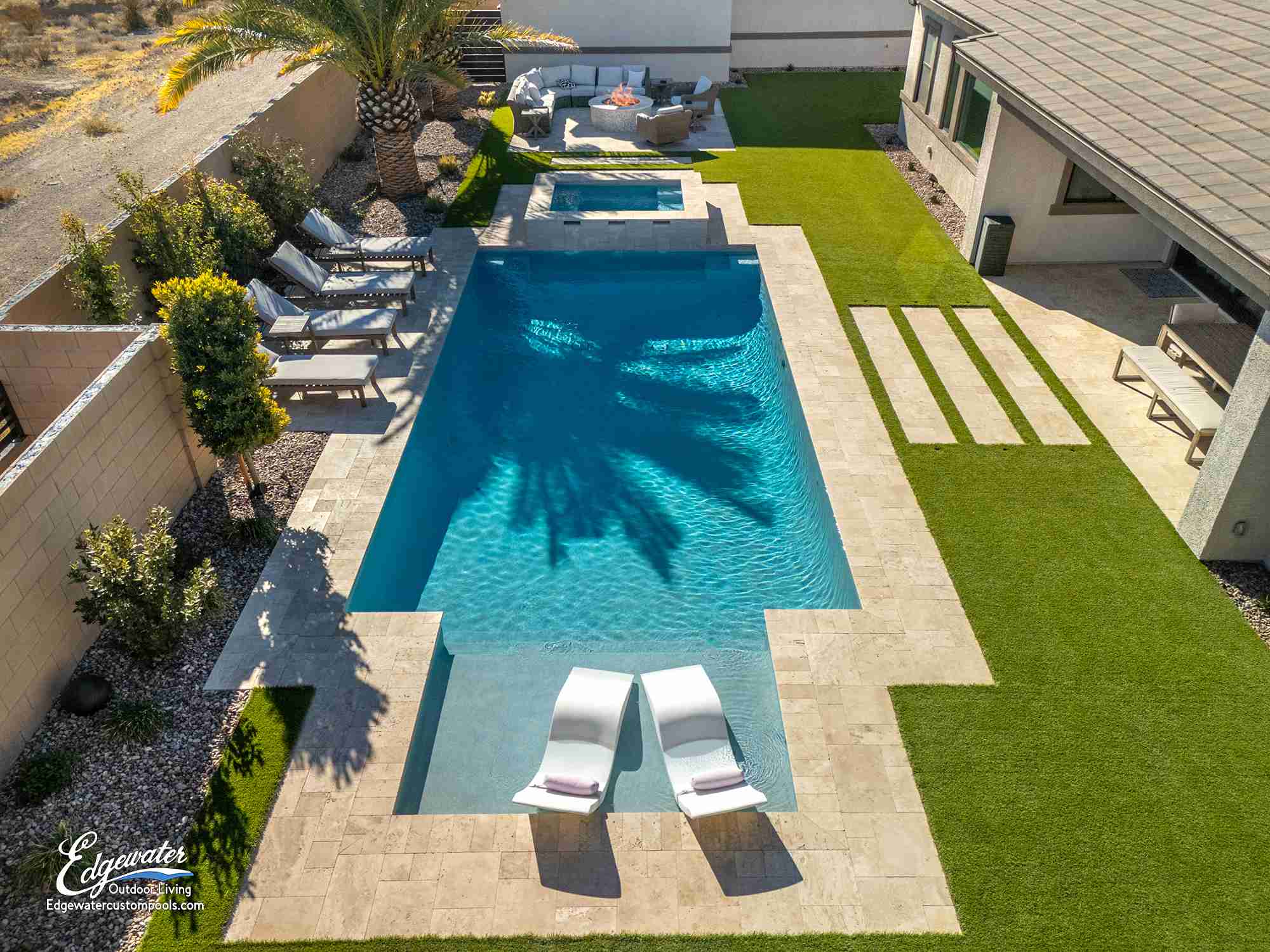
A backyard pool is one of the best features a Las Vegas home can have. It is also a responsibility. Residential pools require proper safety barriers and equipment both to comply with Nevada law and to protect children, guests, and pets from the risk of accidental drowning.
This guide covers what Nevada and Clark County require for residential pool safety, what gate and cover options are available, and how to think about pool safety as part of your overall outdoor design rather than as an afterthought.
Edgewater Custom Pools and Landscaping installs safety barriers and covers on every pool we build, and our team helps clients understand what is required by code and what goes beyond the minimum to provide genuine protection.
What Does Nevada Law Require for Residential Pool Safety?
Nevada Revised Statutes require that all new residential pools be surrounded by a barrier that prevents unsupervised access by young children. The specific requirements are enforced at the local level and are addressed in Clark County and City of Las Vegas building codes.
Key requirements that apply to most Las Vegas residential pool installations include:
- A minimum barrier height of 60 inches (5 feet) surrounding the pool area
- Gates that are self-closing and self-latching, with the latch positioned on the pool side of the gate so it cannot be reached by a child from the outside
- Gate openings and barrier gaps that do not allow a 4-inch sphere to pass through
- Barriers that do not have horizontal rails or footholds that could allow a child to climb over
- Direct house-to-pool access points must also be protected if the house wall serves as part of the pool barrier
These requirements apply to new construction. Existing pools may be subject to different retrofit requirements depending on when they were installed and in which jurisdiction. Always verify current local requirements with your permit office or builder before beginning a project.
What Types of Pool Gates Are Available for Las Vegas Homes?
Pool gates range from basic aluminum safety gates to architecturally integrated custom designs. In Las Vegas, where the pool and outdoor space are visible year-round, many homeowners prefer gates that provide required safety while complementing the overall aesthetic of the backyard.
Coded and Keyed Entry Gates
A coded pool gate uses a combination entry mechanism that adults can operate easily but that a young child cannot figure out. The self-closing and self-latching mechanism ensures the gate returns to the secured position after each use, eliminating the risk of a gate being left open by a distracted adult.
Edgewater offers pool coded gate options in multiple styles and finishes. A coded gate provides the combination of genuine access control and visual design that most Las Vegas homeowners are looking for in a pool barrier solution.
Automatic Closing Gates
Automatic closing gates use spring mechanisms or hydraulic hinges to ensure the gate closes and latches after every use. These are the most reliable option for households where the gate sees heavy traffic and where the risk of someone forgetting to close it manually is a concern.
Glass Panel Gates
Frameless or semi-frameless glass panel gates provide safety without visually blocking sightlines to the pool. They are increasingly popular in Las Vegas because they allow the backyard to feel open and connected while still meeting barrier requirements. Glass panels should be tempered safety glass rated for exterior use.
Do Pool Covers Count as a Safety Barrier in Nevada?
Motorized safety covers can be approved as part of a pool barrier system in Nevada under certain conditions, but they are generally not accepted as the sole barrier on their own. Safety covers must meet ASTM F1346 standards to be considered as part of a code-compliant barrier system.
A motorized cover rated to ASTM F1346 is designed to support the weight of a child who might walk onto it and to prevent submersion, which distinguishes it from standard solar or winter covers that are not safety-rated. Standard covers should not be considered a safety feature for drowning prevention purposes.
Edgewater offers pool cover options in a range of colors and configurations. Our team can advise on which cover products meet Nevada safety standards and how they can be incorporated into your barrier design.
What Pool Safety Features Go Beyond the Legal Minimum?
Compliance with code requirements provides a baseline level of protection. Families with young children often choose to go further with additional safety layers. These are not required by law but are recommended by pool safety advocates:
- Pool alarms: surface wave sensors or subsurface motion detectors that trigger an audible alarm when something enters the pool water. These provide a secondary alert if a child gets past the barrier.
- Door alarms: alarms on any house door that opens directly to the pool area that alert adults when the door is opened without the alarm being disarmed first.
- Fence covers: mesh or solid fence panels that temporarily block access to pool areas when the pool is not in use during high-risk periods.
- Swim lessons: the American Academy of Pediatrics recommends formal swim lessons beginning at age one for most children. Lessons do not replace physical barriers but significantly reduce risk.
How Do You Design Pool Safety Into the Overall Backyard?
The best pool safety setups are ones that integrate naturally into the overall design of the yard rather than looking like retrofitted code compliance. This requires planning the barrier, gate placement, and cover system during the initial design phase rather than adding them after construction.
When designing a pool safety barrier as part of the overall yard, consider:
- Gate placement that provides direct access from the main outdoor living area while keeping other entry points secured
- Barrier materials that match or complement the fencing, decking, and landscaping used elsewhere in the yard
- Cover systems that can be integrated into the pool edge and coping without disrupting the visual flow of the pool design
- Lighting around gate areas and pool perimeter to ensure visibility during evening hours
Edgewater designs pool safety barriers and gate systems as part of the complete pool plan, ensuring that safety requirements are met without compromising the aesthetic goals of the project. View completed pool designs in the gallery to see how barriers and gates look in finished Las Vegas backyards.
What Should You Do If You Move Into a Las Vegas Home With an Existing Pool?
If you purchase a Las Vegas home with an existing pool, the first step is to evaluate the current barrier and safety setup against current code requirements. Older pools may not have self-latching gates, adequate barrier heights, or properly positioned latches.
An existing pool safety evaluation should cover: gate operation and latch function; barrier height and gap clearance; direct house-to-pool access points; cover type and whether it is safety-rated; and the condition of all gate hardware.
Retrofitting a pool with an updated gate and barrier system is one of the most cost-effective safety investments available. Our team can assess your existing setup and recommend what upgrades, if any, are needed to meet current standards.
Ready to Build a Safe, Beautiful Pool?
Pool safety and pool design are not in conflict. With the right planning, a pool surround can include all required safety features and still feel like the inviting, resort-quality outdoor space you envisioned.
Edgewater Custom Pools holds NV License #0041387A, #55304, and #0084991. Every pool we build meets or exceeds Nevada’s safety requirements, and our team guides every client through barrier and cover selection as part of the standard design process.
Call 702-254-6380 or visit the estimate request page to start planning your pool.
Call 702-254-6380 | Request a Free Estimate | View Our Gallery