The surface surrounding your pool does more than look good. It affects how hot the ground gets underfoot in July, how safe the area is when wet, how much maintenance you sign up for over the next decade, and how cohesive the finished backyard feels as a whole.
In Las Vegas, where summer temperatures regularly exceed 110 degrees Fahrenheit, decking and coping choices that look beautiful in a showroom can become painful to walk on barefoot or start cracking within a few seasons if they are not appropriate for the desert climate.
This guide covers the most common pool decking and coping materials available to Las Vegas homeowners, how each performs in extreme heat, and what questions to ask when choosing between them.
What Is Pool Decking and What Is Coping?
Pool decking is the hardscape surface that surrounds the pool and defines the usable outdoor living space. It is where you walk, set furniture, place loungers, and transition between the pool and the rest of the backyard.
Coping is the edge material that caps the bond beam of the pool and creates the finished border where the pool wall meets the deck. Coping is both structural and aesthetic. It protects the pool shell, creates a safe gripping edge for swimmers, and serves as the visual frame of the finished pool.
In most designs, decking and coping are chosen together because they sit directly adjacent to each other and need to work both visually and practically as a unified system.
What Decking Materials Work Best in Las Vegas Heat?
Travertine
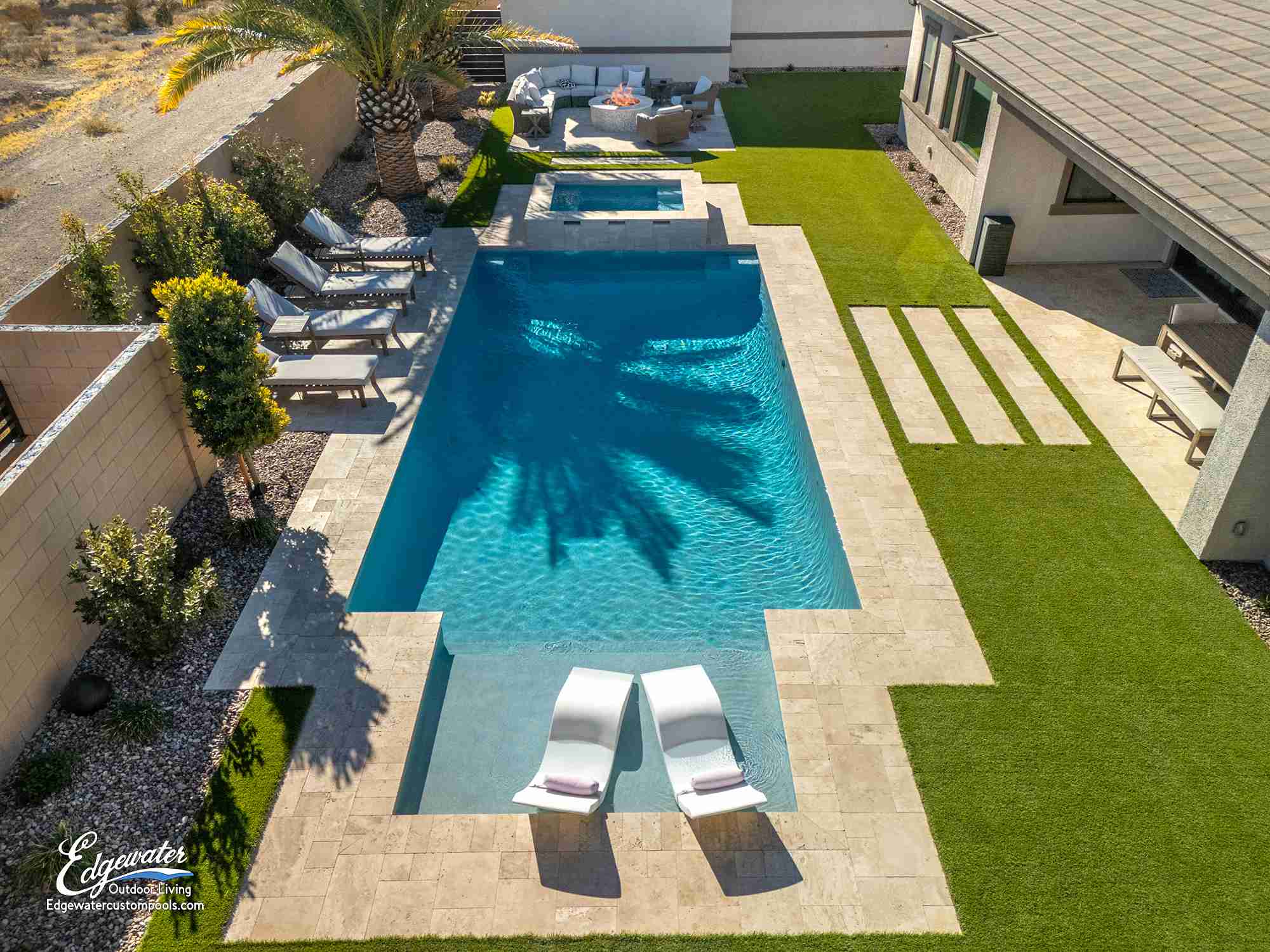
Travertine is one of the most popular pool decking materials in Las Vegas and across the Southwest. It is a natural stone that stays significantly cooler underfoot than concrete or pavers, making it one of the most practical choices for a climate where barefoot comfort matters most of the year.
The reason travertine stays cooler is its natural porosity. Rather than absorbing heat and radiating it back, the open pores allow some heat to dissipate. Travertine is also naturally slip-resistant when tumbled or brushed, which helps around wet pool environments.
Travertine is available in several finishes and colors, from warm beige and ivory tones to deeper walnut and noce shades. It can be used for both decking and coping and creates a cohesive, high-end look that photographs well and holds its value over time.
The primary tradeoff is cost. Travertine is typically more expensive than concrete and requires occasional sealing to protect against pool chemicals and staining. You can explore pool decking options and granite and stone finishes on the Edgewater selections pages.
Concrete and Stamped Concrete
Concrete is the most widely used pool decking material because it is affordable, durable, and highly customizable. A standard broom-finished concrete deck is the baseline option for most pools. It is practical, safe, and easy to install.
Stamped concrete takes the same base material and adds texture and pattern to simulate stone, slate, wood, or other materials. Color can be added during the pour or applied afterward. Stamped concrete costs more than plain concrete but significantly less than natural stone.
The main drawback of concrete in Las Vegas is heat retention. Dark concrete especially can get extremely hot during peak summer hours. Light-colored finishes help, and some homeowners add a cool-deck coating or acrylic overlay to reduce surface temperature and add a non-slip texture.
Pavers
Concrete pavers and natural stone pavers are a popular alternative to poured concrete. Pavers are individual interlocking units that are installed over a compacted base rather than poured as a slab. This means they can flex slightly with soil movement without cracking the way a slab can.
Pavers come in a wide range of materials, sizes, and colors. Concrete pavers are cost-effective and available in many styles. Travertine pavers combine the benefits of natural stone with a modular installation. Flagstone and other natural options are available for a more organic look.
One practical advantage of pavers is repairability. If a section settles or a paver cracks, it can be replaced individually without disturbing the rest of the deck. You can browse pool tile and grout options alongside decking to coordinate the full design.
Granite and Natural Stone
Granite and other natural stone materials are premium options that offer exceptional durability and a distinctive appearance. Natural stone does not fade, does not require repainting, and typically holds up better over decades than manufactured alternatives.
The tradeoff is heat absorption. Darker granite in particular can get very hot in direct Las Vegas sun. Lighter granite finishes and certain stone types with more reflective surfaces perform better in terms of surface temperature. Edgewater offers a range of granite options for pool decking and coping projects.
What Coping Options Are Available?
Coping materials typically match or complement the deck. Common coping choices for Las Vegas pools include:
- Bullnose travertine: A rounded-edge travertine tile used for coping that is both comfortable to grip and visually consistent with travertine decking.
- Cantilevered concrete: The deck material overhangs the pool edge, creating a clean seamless look without a separate coping piece.
- Natural stone: Granite, limestone, or other stone cut to size with a finished edge creates a high-end border that is durable and elegant.
- Brick: Older pools often used brick coping for a classic look. Brick is durable and cool to the touch but is less common in newer Las Vegas builds.
The coping profile also matters. Flat coping lays flush with the deck. Bullnose coping rounds over the pool edge. Cantilevered coping creates a shadow line that makes the pool look slightly elevated. Each creates a different visual effect and has practical implications for how easy it is to grip when exiting the pool.
How Do You Choose Between Cool-Deck and Standard Concrete?
Cool-deck is a spray-on or rolled acrylic coating applied over existing concrete that claims to reduce surface temperatures compared to untreated concrete. It is often marketed specifically to pool owners in hot climates like Las Vegas.
Cool-deck does reduce surface temperature compared to bare concrete in direct sun, but it is not as cool as travertine or lighter-colored pavers. It requires periodic recoating as the surface wears over time.
If you already have a concrete deck and want to reduce heat without replacing the surface, cool-deck or a similar acrylic overlay can be a cost-effective solution. If you are building from scratch, choosing a naturally cool material like travertine or lighter-colored pavers from the start may be more cost-effective over the life of the pool. Edgewater’s decking selection includes options suited to both approaches.
What Is the Best Coping Shape for a Las Vegas Pool?
The best coping shape depends on the pool design and how the pool will be used. Families with young children often prefer a rounded bullnose edge because it is softer and less sharp if someone slips or falls against it. Pools designed for a more modern aesthetic often use flat or cantilevered coping that creates clean lines and a contemporary look.
In Las Vegas, where outdoor living spaces are extensions of the interior, coping shape and material often needs to coordinate with the home’s architectural style, the patio cover design, and any adjacent outdoor kitchen or entertainment area.
How Should Decking and Coping Work with the Rest of the Backyard?
The most successful pool designs treat decking and coping as part of a larger hardscape system rather than isolated choices. This means coordinating the deck surface with walkways, patios, and any patio cover or shade structure that may be part of the project.
Edgewater designs pools with the full backyard in mind. Decking, coping, decorative rock, artificial turf, and landscape elements are all considered together to create a cohesive outdoor living space that works in the Las Vegas climate year-round.
Frequently Asked Questions About Pool Decking in Las Vegas
What decking material stays coolest in summer?
Travertine consistently performs best in terms of staying cool underfoot in Las Vegas summer heat due to its natural porosity. Light-colored concrete with a cool-deck coating and lighter-toned pavers also perform well compared to dark concrete or dark granite.
How much does pool decking cost in Las Vegas?
Costs vary significantly by material and scope. Broom-finished concrete typically runs the lowest per square foot. Stamped concrete and pavers fall in the mid-range. Natural stone and travertine are typically the highest upfront cost but often have lower long-term maintenance costs. Edgewater provides project-specific quotes that cover decking as part of the full pool design.
Can I add decking to an existing pool?
Yes. Resurfacing or adding new decking around an existing pool is a common remodeling project. Pavers can often be installed over existing concrete with proper preparation. Travertine or new concrete requires removing the existing surface in most cases. Edgewater handles both new construction and pool renovation projects.
Do I need a permit for new pool decking in Las Vegas?
Permit requirements vary depending on the scope of the project. Replacing like-for-like decking may not require a permit, while expanding the deck area or making structural changes typically does. Edgewater handles permitting as part of the project planning process.
Call 702-254-6380 | Request a Free Estimate | View Our Gallery